Survey the chimney liner route
Appliance, fuel, route, dimensions, condition, access, and local questions.
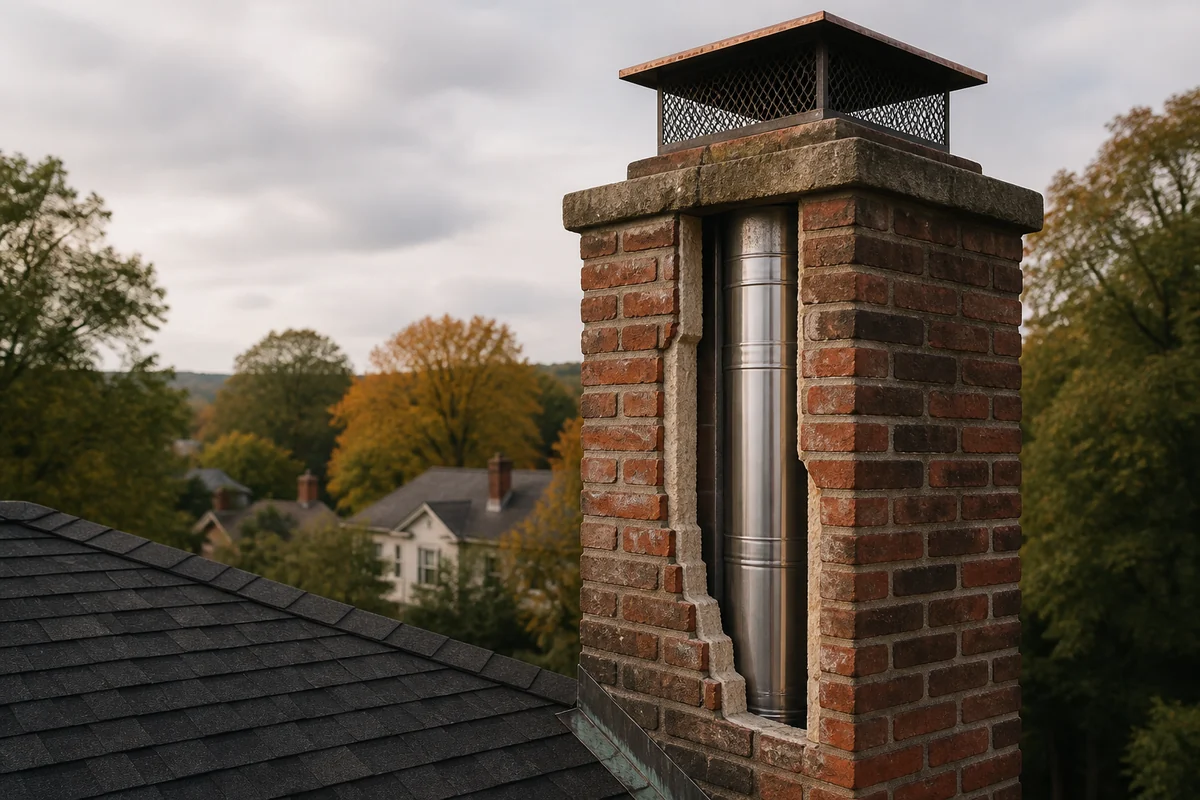
Compare inspection, sizing, material, insulation, connections, permits, and closeout before choosing a chimney relining path.
The correct material depends on the appliance, listed use, flue geometry, preparation, insulation, and the existing chimney. A material label is not a complete design.
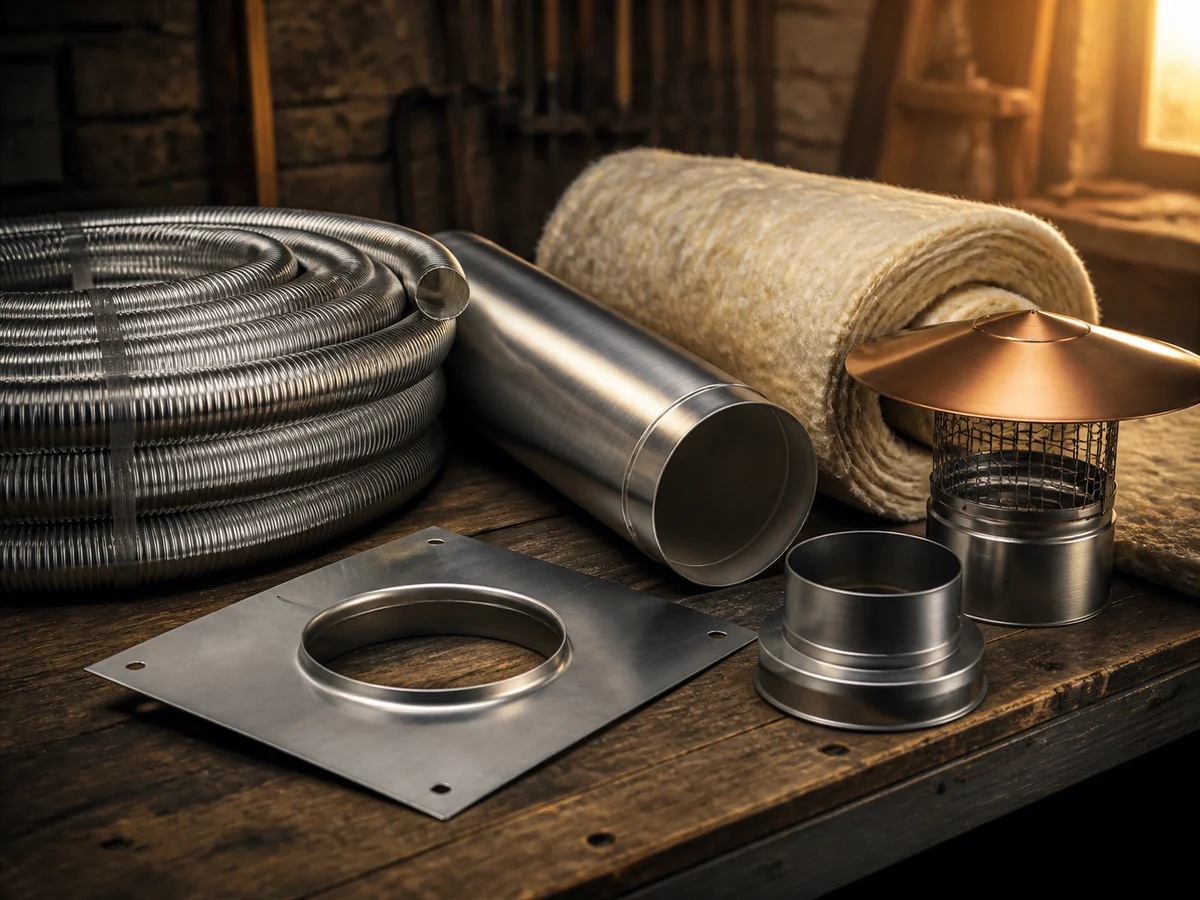
Keep product, alloy, diameter, parts, and insulation together.
Open guideDocument preparation, proprietary material, final size, and cure.
Open guide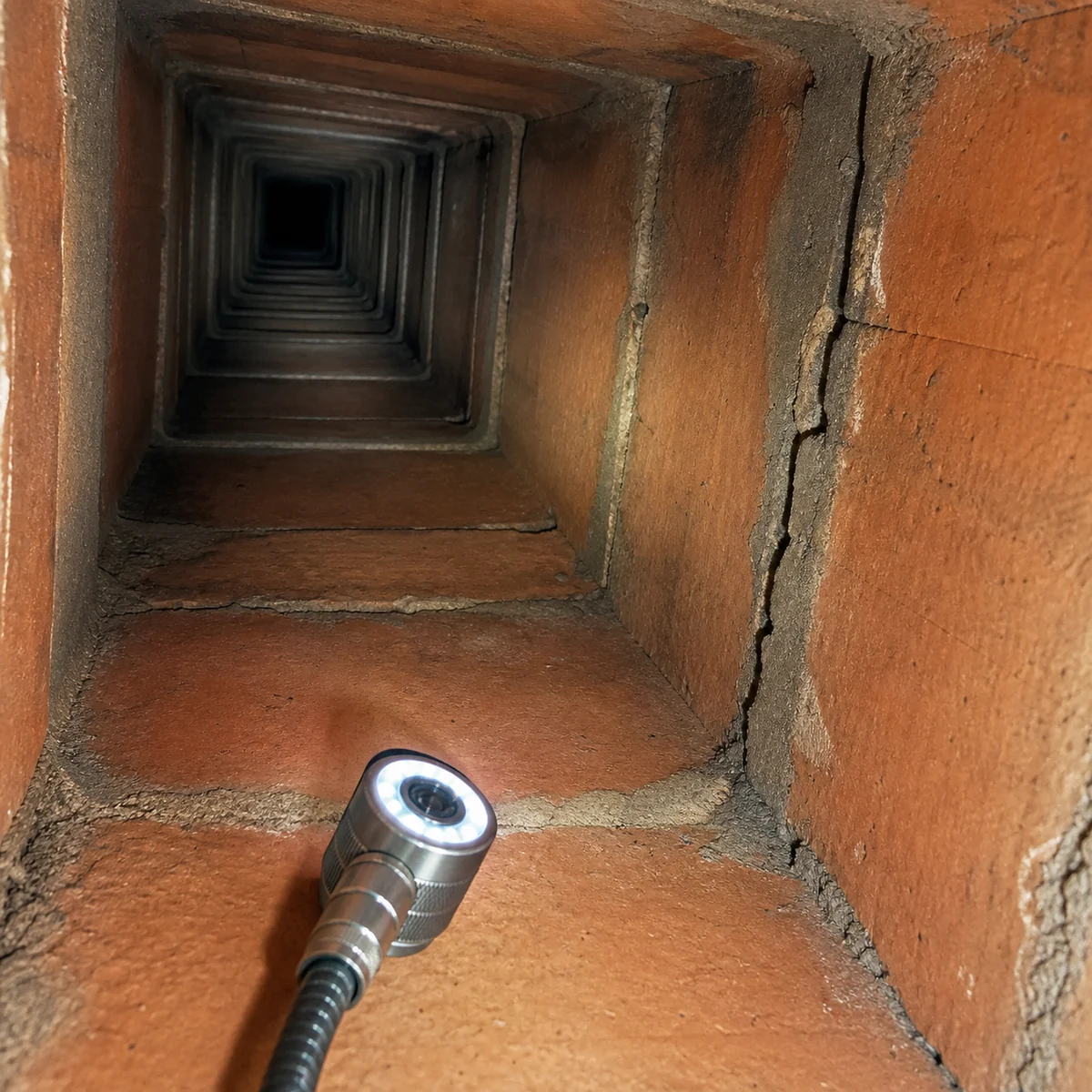
Locate the damage before comparing local repair with full relining.
Open guideIMAGE RECORDA useful inspection identifies the flue and appliance, then records material, cracks, gaps, deposits, corrosion, staining, offsets, dimensions, and the point where visibility ends.
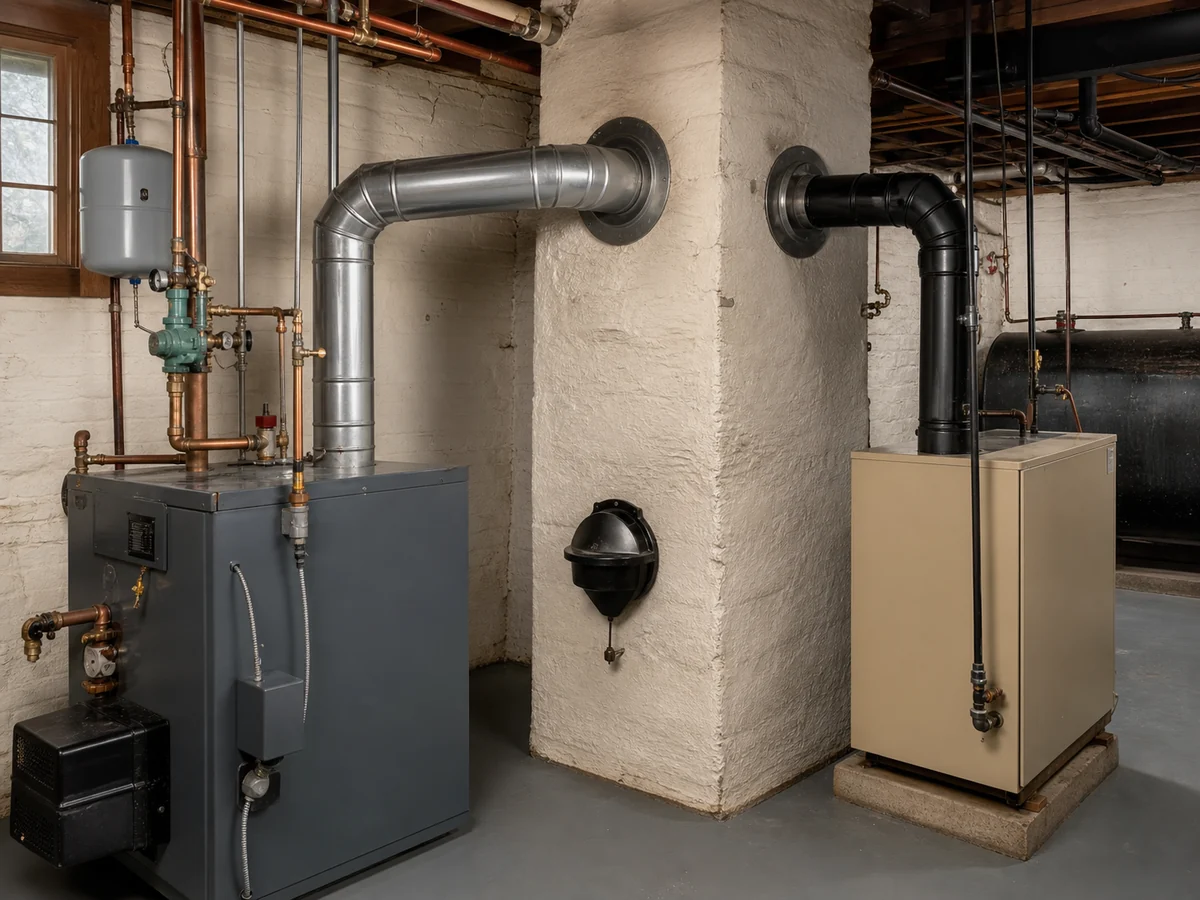
Gas and oil systems need current appliance data, connector measurements, venting-category review, approved sizing, and commissioning records.
Check appliance category, input, connector, condensation, and common venting.
Coordinate the burner, draft control, connector, liner, and water-entry record.
Keep the measurements and approved sizing basis with the installed system.
Appliance, fuel, route, dimensions, condition, access, and local questions.
Product, approved use, size, insulation, components, and preparation.
Access, protection, restrictions, connections, support, and termination.
Inspection, operating checks, imagery, product records, and warranty.
Firebox, smoke chamber, damper or appliance adapter, liner, insulation, supports, clearances, and termination belong to one documented route.
Measure the fireplace and smoke path before promising a liner will solve draft.
Start with the stove model, manual, connector, hearth, and continuous liner plan.
Use images and limits to turn an internal view into a decision record.
One price per foot can hide the work that determines whether the system fits and closes correctly.
Open the cost checklistThese guides narrow the questions. A qualified provider still needs to inspect the actual system.
No. The appliance, existing passage, material, condition, size, and approved venting method must be inspected before a liner is recommended.
Identify the appliance and fuel, inspect the flue, record dimensions and offsets, review access, choose a compatible listed system, and confirm the local permit path.
No. Product listings, alloys, wall designs, approved fuels, components, insulation requirements, and installation instructions differ.
No. Water entry, exterior masonry, crown, cap, and flashing require their own diagnosis and scope.
No. The appliance category and manufacturer instructions determine the venting path. Some equipment uses another approved venting system.
Compare the same inspection record, product, diameter, preparation, insulation, access, connections, permits, testing, warranty, exclusions, and change conditions.
Keep inspection images, appliance data, sizing basis, product records, permits, installation photos, signoffs, warranty, and service history.
Include the property town, fuel, equipment type, chimney concern, prior inspection, and any access notes.
845-555-0162